Below Knee Prosthesis: A Complete Guide for Amputees in the UAE
From sockets to carbon fibre feet — what every below-knee amputee and family should know about transtibial prosthetics in the UAE.
osing a leg below the knee changes life — but it does not have to limit it. Modern below-knee prosthetics let amputees walk, work, drive, travel, and even run again. With the right components and good rehabilitation, most users return to full daily life within a few months.
This guide explains everything in simple terms — what a below-knee prosthesis is, how the parts work together, what fitting feels like, what it costs in the UAE, and how to choose the right one for your lifestyle.
In short: A below-knee prosthesis (also called a transtibial prosthesis) is a custom-made leg that replaces the lower leg below your natural knee. It has four main parts — a socket, a suspension system, a pylon, and a prosthetic foot. Costs in the UAE range from around AED 12,000 for basic systems to over AED 200,000 for advanced bionic feet.
- A below-knee prosthesis keeps your real knee, which makes walking easier than an above-knee system.
- Most healthy amputees walk again within 8 to 12 weeks of fitting.
- The socket is the most important part — a bad fit ruins even the best foot.
- Costs in the UAE depend almost entirely on which foot and suspension you choose.
- A good prosthesis lasts 3 to 5 years; the liner gets replaced much sooner.
Part OneWhat Is a Below Knee Prosthesis?
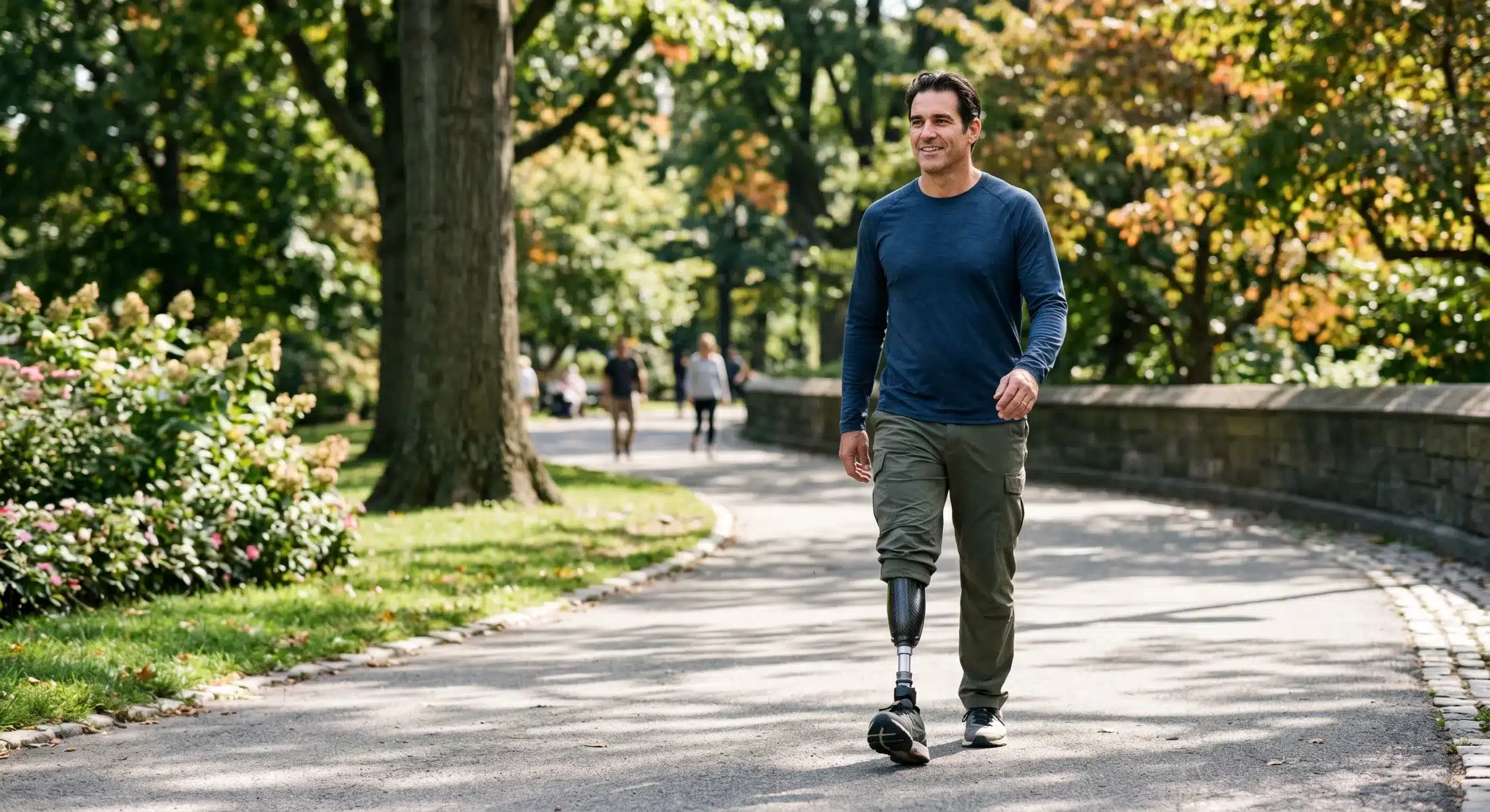
A below-knee prosthesis is a leg replacement worn after a transtibial amputation. That word just means an amputation done below the knee joint. Your real knee stays. Only the lower leg and foot are replaced.
This matters more than most people realise. Keeping your own knee saves a huge amount of energy when you walk. Studies show below-knee amputees use about 25% more energy to walk than people with two natural legs. Above-knee amputees use 60% more or higher. That gap is all because of the knee.
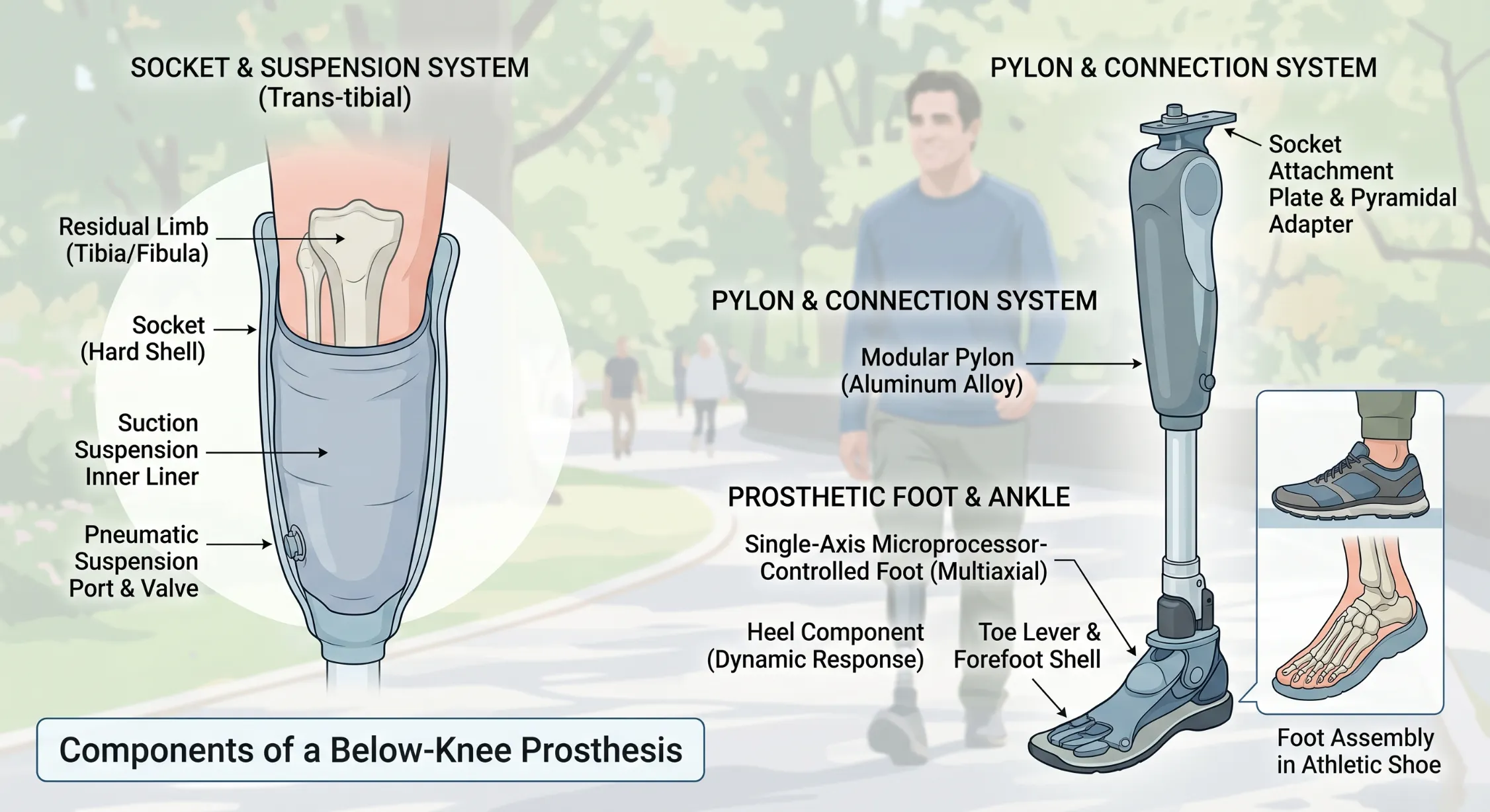
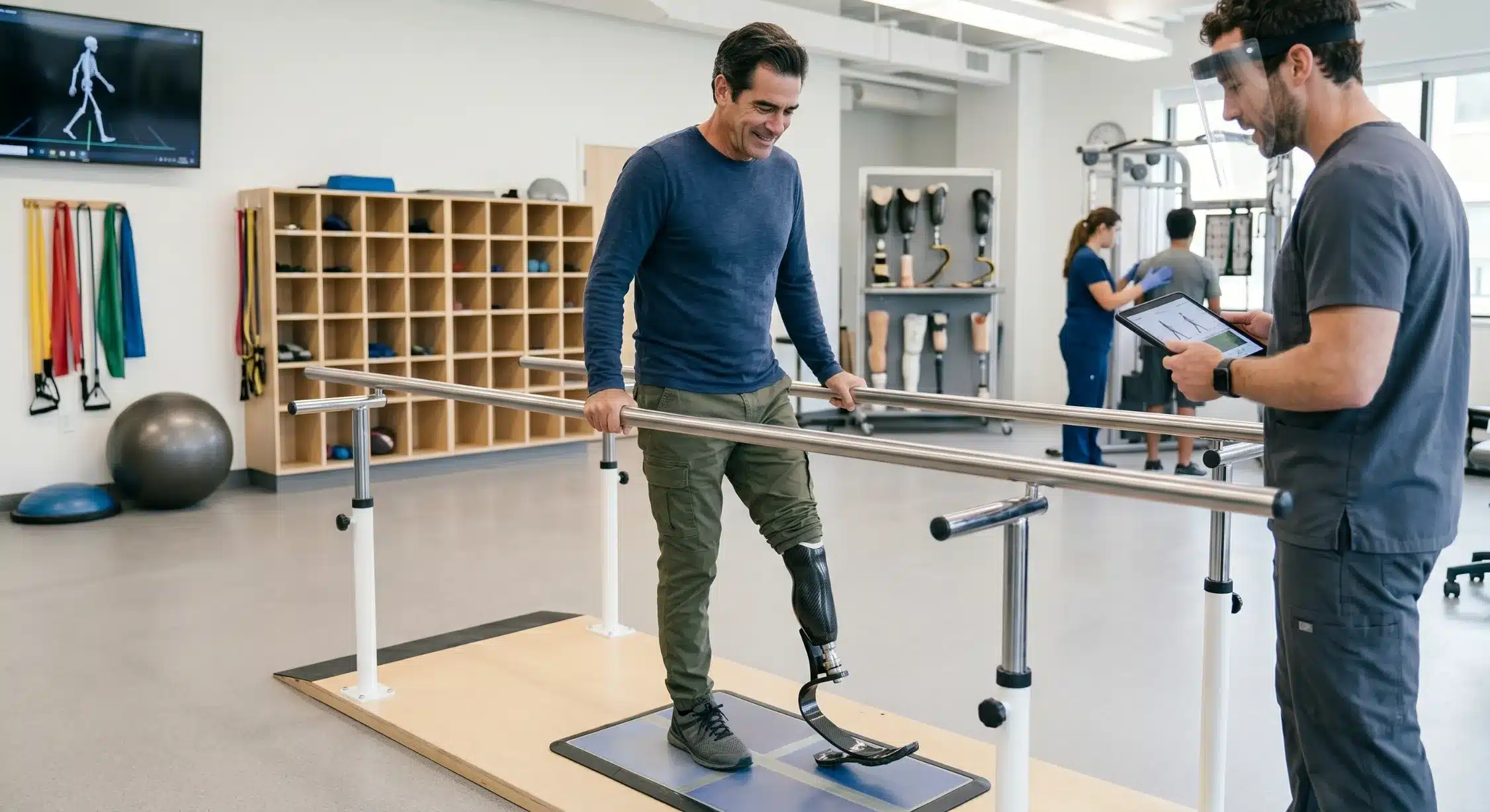
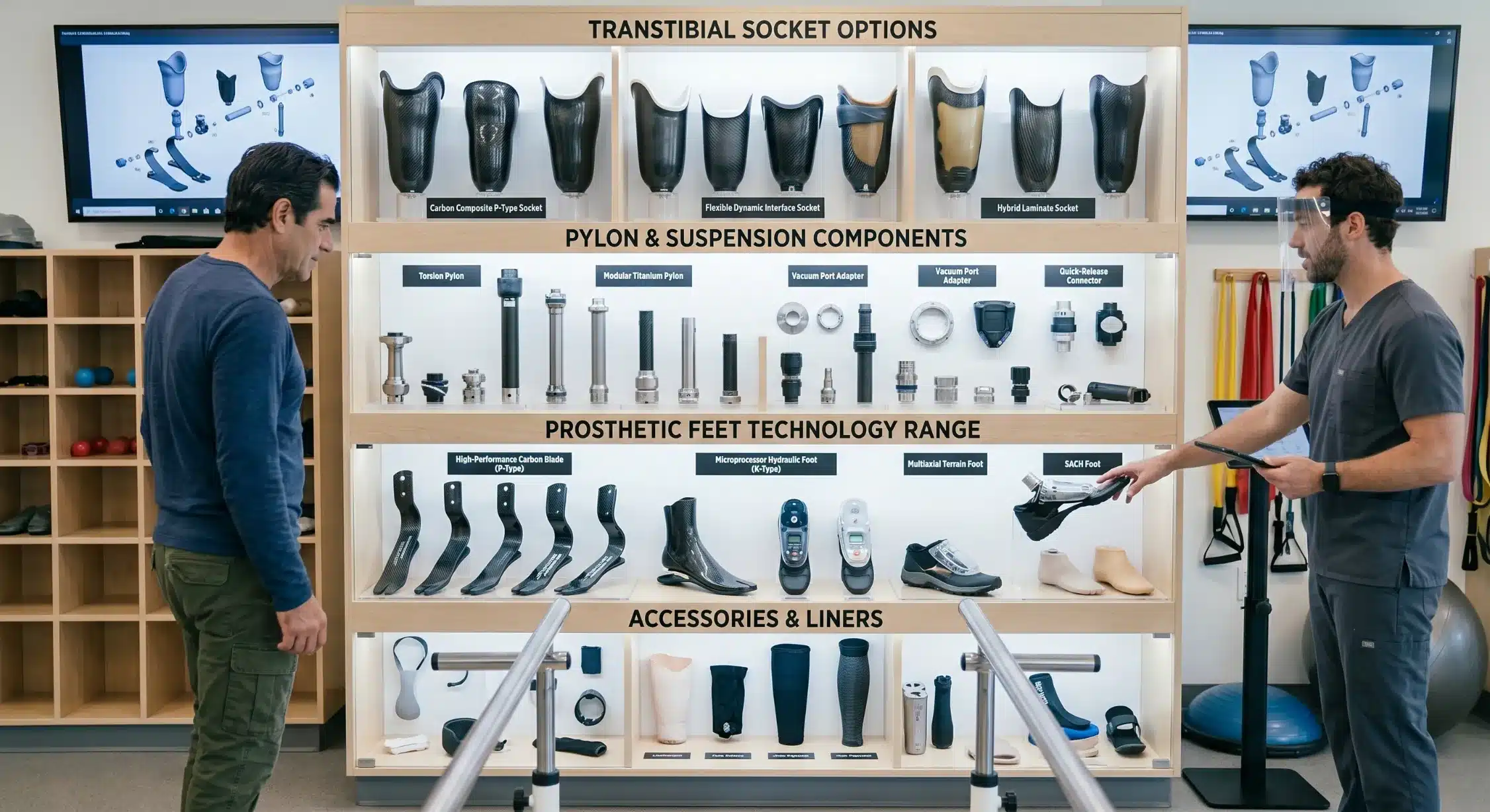
A below-knee prosthesis has four main parts that work as one system: the socket (the custom cup that holds your stump), the suspension (what keeps the leg attached), the pylon (the strong tube acting as your shin), and the prosthetic foot. Get any one of these wrong and the whole leg feels wrong. That is why the fitting process is so careful.
Part TwoWho Needs a Below Knee Prosthesis?
Below-knee amputations are far more common than above-knee ones. The main reasons people need them are:
Whatever the cause, the goal is the same — get you walking, working, and living the life you want.
Our Below knee Prosthetic ProductsExplore our Below knee prosthetic products
Showing the single result
Part ThreeThe Four Main Parts Explained
The Socket
The most personal part of the whole leg. It is shaped to your exact residual limb. No two sockets are the same.
A good socket spreads pressure evenly. A bad one creates hot spots and blisters. Modern UAE clinics typically use TSB (Total Surface Bearing) sockets paired with silicone liners.
The Suspension
This is how the leg stays on. Options include pin-lock liners (easy for beginners), suction sockets (very secure), vacuum systems (gold standard for active users), and simple sleeves.
Pin-lock is the most common starting point. Vacuum suspension offers the most stable, glued-on feel.
The Pylon
The tube between the socket and foot — your new shin bone. Most pylons are made from aluminium, titanium, or carbon fibre.
Add-ons like shock absorbers, torsion units, and rotation adapters make a big comfort difference. Rotation adapters are especially useful for prayer.
The Prosthetic Foot
Where the magic happens. Choices range from basic SACH feet for low-activity users to carbon fibre energy-storing feet and bionic hydraulic ankles.
A sport-grade foot on a poor socket feels worse than a simple foot on a perfect one. Always fit the socket first.
Prosthetic Foot Types & Costs
The foot you choose affects walking quality more than any other component. Here is a clear comparison:
| Foot Type | Best For | Energy Return | Approx. Cost (AED) |
|---|---|---|---|
| SACH foot | Low activity, indoor walkers | Very low | 800 – 2,500 |
| Single-axis foot | Stable walking on flat ground | Low | 2,000 – 5,000 |
| Multi-axial foot | Uneven ground, gardens, beaches | Medium | 5,000 – 12,000 |
| Energy-storing (carbon fibre) | Active adults, walkers and joggers | High | 12,000 – 40,000 |
| Bionic / hydraulic ankle | High-activity users, slopes, stairs | Very high | 60,000 – 200,000+ |
Part FourTypes of Below Knee Prostheses
Below-knee prostheses come in a few main types, and you may use more than one over your journey.
- Preparatory (temporary) prosthesis — the first leg you get, usually 4 to 8 weeks after surgery. Its job is to control swelling, get you walking early, and shape your residual limb.
- Definitive (permanent) prosthesis — your everyday leg, with components matched to your lifestyle. Most people get this 3 to 6 months after surgery.
- Activity-specific prosthesis — a second leg for sport, swimming, or work. Running blades and waterproof beach legs are the most popular.
- Endoskeletal vs exoskeletal — almost all modern legs are endoskeletal, with strong parts inside a soft cosmetic cover. Exoskeletal (hard outer shell) is now rare.
The right prosthesis is not the most expensive one — it is the one that fits your body, your goals, and your daily life.
Part FiveActivity Levels: The K-Scale
Prosthetists use a 5-point scale called the K-level to match you with the right components. It is the standard system used in the UAE and most of the world.
Be honest with your prosthetist about your real activity level. Choosing components for the lifestyle you wish you had — instead of the one you actually live — leads to legs that get left in the cupboard.
Part SixHow a Below Knee Prosthesis Is Fitted
Getting your first leg is not a one-day visit. The full process takes 8 to 16 weeks.
Initial Assessment
A prosthetist checks your stump, skin, strength, other leg, and goals. A doctor’s prescription is needed.
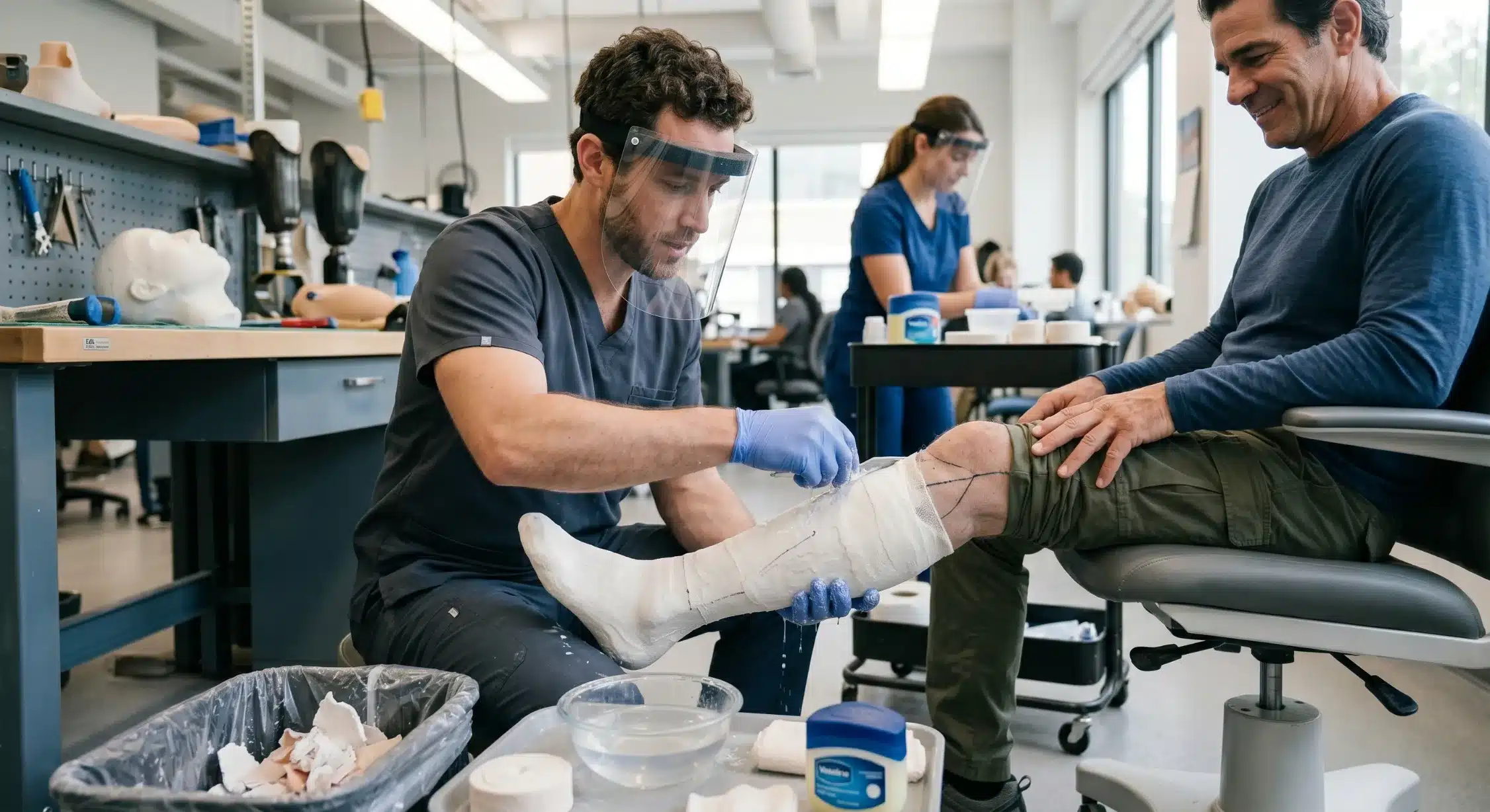
Casting or Scanning
The shape of your stump is captured. Older clinics use plaster wraps. Newer ones use 3D scanners.
Test Socket
A see-through plastic socket is built. You walk in it. Adjustments are made over two or three visits.
Definitive Build
Once the test socket is right, the final socket is made and the pylon and foot are added.
Walking Training
Parallel bars, then walking frame, crutches, cane, then nothing. Most need 4 to 8 therapy sessions.
Follow-Up
Your stump keeps changing for 12 to 18 months. Adjustments and new liners are normal and expected.
Part SevenWalking with a Below Knee Prosthesis
Most below-knee amputees walk again. That is the simple, hopeful truth. Here is what to expect realistically:
Weeks 1 to 4
You will feel tired fast. Skin is sensitive. You walk short distances at home. This is completely normal.
Weeks 4 to 8
Confidence grows. You walk to the car, around shops, and on smooth floors with much less effort.
Months 3 to 6
Stairs, slopes, and uneven ground become normal. Most people return to driving and full-time work.
After 6 Months
The leg feels like a tool, not a problem. Many users return to gym, swimming, and travel comfortably.
You can drive again, pray normally, carry your kids, and travel through any airport in the world. The leg sets off scanners — bring documentation from your prosthetist. The honest hard part is energy. You will get tired faster than before. Build your stamina slowly.
Part EightBelow Knee Prosthesis Cost in the UAE
This is the question everyone asks. Here is a clear range based on what UAE clinics charge in 2026:
| System Type | Price Range (AED) | Best For |
|---|---|---|
| Basic preparatory leg | 8,000 – 15,000 | First leg after surgery |
| Standard definitive leg | 12,000 – 25,000 | K1–K2 users, indoor walkers |
| Mid-range leg | 25,000 – 60,000 | K2–K3 users, daily walkers |
| Premium leg (carbon fibre + vacuum) | 60,000 – 150,000 | K3 users, working adults |
| Bionic / hydraulic ankle | 150,000 – 350,000+ | K3–K4 users, slopes & stairs |
| Sport / running blade (extra) | 30,000 – 90,000 | Athletes, runners |
What changes the price most: The foot and the suspension system. The socket itself is a small part of the total bill.
Many UAE health insurance plans cover prosthetics partly or fully when a doctor prescribes one. Coverage rules vary by plan. Read your policy — better, let your clinic help you write the insurance request, since clinics know the right wording.
Part NineCare & Maintenance
A clean, well-maintained leg lasts longer and keeps your skin healthy. Daily care takes about 5 minutes.
Part TenCommon Problems & Quick Fixes
Even with a perfect setup, small issues come up. Here are the most common problems and what usually solves them:
My socket hurts after an hour
Likely cause: Stump volume changed. Try adding a sock ply. If it still hurts, see your prosthetist.
My skin keeps breaking down
Likely cause: Old liner, dirty socket, or poor fit. Wash everything, rest the skin, get the fit checked.
I get phantom limb pain
Likely cause: Common in the first year. Mirror therapy, gentle massage, and medication can all help.
My leg feels too long or short
Likely cause: Alignment drift. Book a 30-minute tune-up with your prosthetist — it is a quick in-clinic fix.
I sweat too much in summer
Likely cause: UAE heat. Try a perforated liner, antiperspirant for stumps, or a second liner to swap mid-day.
My foot makes clicking sounds
Likely cause: Loose screws or worn bushings. Stop using the leg and book a service visit promptly.
Part ElevenHow to Choose the Right Prosthesis
When you sit down with your prosthetist, ask these questions:
A good clinic will not push you to the most expensive option. They will fit the system to your goals, not their stock list. Always work with a certified prosthetist who takes time to assess, listen, and adjust — fitting a below-knee prosthesis is a clinical process, not a retail transaction.
Part TwelveFrequently Asked Questions
How long until I can walk after a below-knee amputation?
Most healthy adults take their first prosthetic steps 6 to 10 weeks after surgery, once the wound has healed. Independent walking with no aid usually comes within 3 to 6 months. Daily physical therapy is the single biggest factor in getting there faster.
What is the difference between below-knee and above-knee prosthesis?
A below-knee prosthesis replaces only the lower leg. You keep your real knee, which means easier walking and lower energy use. An above-knee prosthesis replaces both the knee and the lower leg, which is harder to learn and more expensive overall.
Can I wear a below-knee prosthesis in water?
Most everyday legs are water-resistant, not waterproof. Splashes are fine. Swimming and showering are not. If you want to swim or shower with a leg on, ask for a dedicated waterproof prosthesis. Many UAE users keep a daily leg and a separate beach leg.
How much does a below knee prosthetic leg cost in the UAE?
A basic below-knee prosthesis costs around AED 12,000 to 25,000. A premium leg with a carbon fibre foot and vacuum suspension costs AED 60,000 to 150,000. Bionic ankles can exceed AED 250,000. Insurance often covers part of the cost.
How long does a below-knee prosthesis last?
A definitive prosthesis lasts 3 to 5 years on average. The liner needs replacement every 6 to 12 months. The socket may need a refit within the first 12 to 18 months as your stump shapes up. Active users wear out feet faster than gentle walkers do.
Can I run with a below-knee prosthesis?
Yes. Most K3 and K4 users can run with the right setup. Daily energy-storing feet allow light jogging. For real running, a separate carbon fibre blade is needed. Hundreds of below-knee amputees run marathons every year.
Will I have phantom limb pain forever?
Phantom limb sensation often fades over time. Phantom limb pain is also common in the first year and usually improves. Mirror therapy, gentle exercise, and good prosthetic fit all help. Severe pain should be reviewed by a pain specialist — good treatments exist.
Can I drive with a below-knee prosthesis?
Yes, almost all below-knee amputees return to driving. If your right leg was amputated, an automatic car is best, and a left-foot accelerator pedal can be installed. Update your UAE driving licence accordingly. Most users are back behind the wheel within 4 to 6 months.
The right partner makes all the difference
StepsCreators provides custom below-knee prosthetic services across the UAE and the wider GCC — assessment, custom fabrication, fitting, and long-term support.